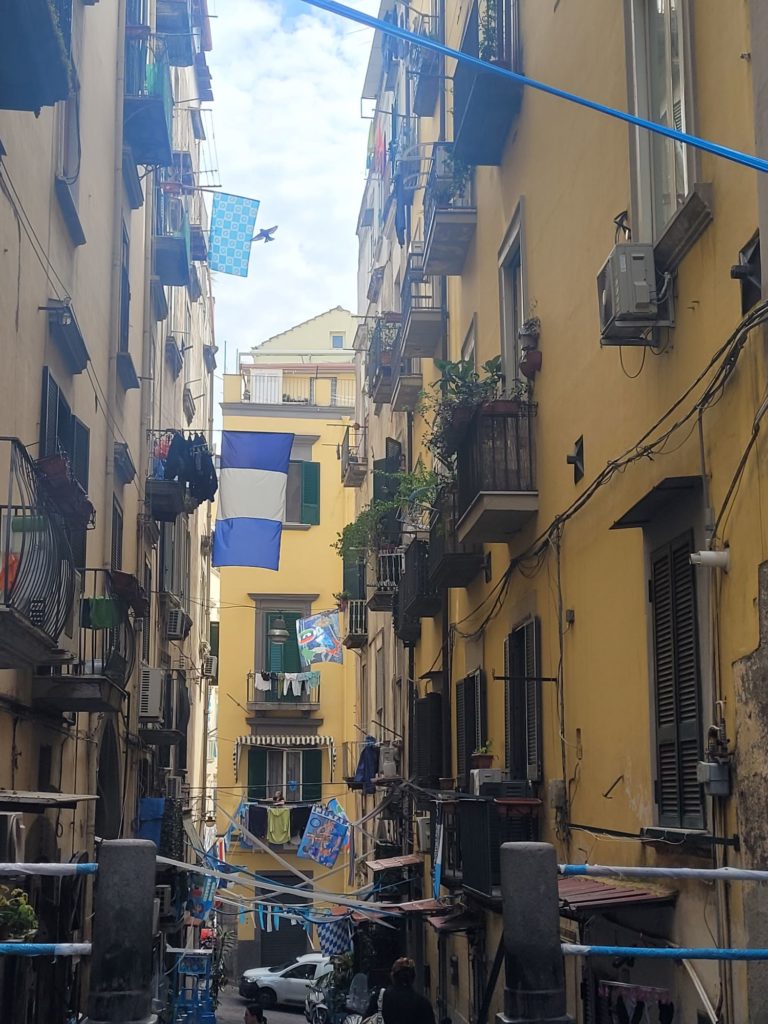
I’m in the back of a Bolt being driven through what the driver tells me is the most dangerous housing estate in Portugal. ‘Do I need to wind up my window?’ I say, looking dubiously at the two shabbily dressed men who are queuing up to get something through a small hatch. (Methadone? Food parcels? A Cornetto?) The apartments around us look partially derelict, tattered Porto FC banners up at some of the windows. ‘No,’ he replies, ‘we’ll be through it quickly. And you won’t believe what’s round the corner. Some of the richest people in the city’. He rolls his eyes in the rear view mirror and in no time, we are sweeping past a French Lycée bustling with parents and chattering children, and vast, palatial homes lining the wide avenue. Hackney to Holland Park in a moment. As much as I love Porto, it would be wrong to close my eyes to all that doesn’t work here.
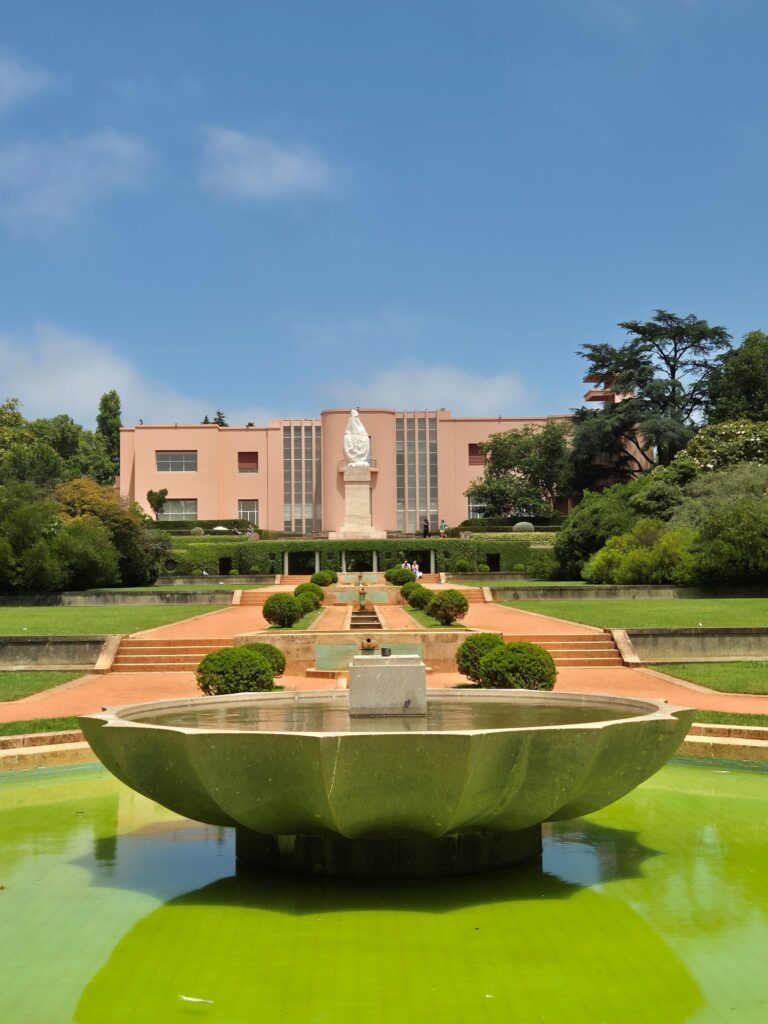
It’s officially holiday time. My laptop is packed away and whilst I would have preferred to be reclining on a lounger with a dirty Pina Colada, the weather is not co-operating. Instead, I am indulging my interest in art deco architecture at the Foundation Serralves which sits on the other side of the estate. Porto is full of art deco and art nouveau buildings that continued to be built well into the 1940s, as the rest of Europe was being bombed and occupied. A few days earlier, I’d been on a guided tour of the city’s highlights, expertly led by a resident Russian named Olga who’d described this pink, iconic building as a must see. As ever here, the weather turns on a sixpence, and blue skies seep through from behind the grey, making the architecture pop. I can’t keep my camera off it. Porto is a game of two halves.
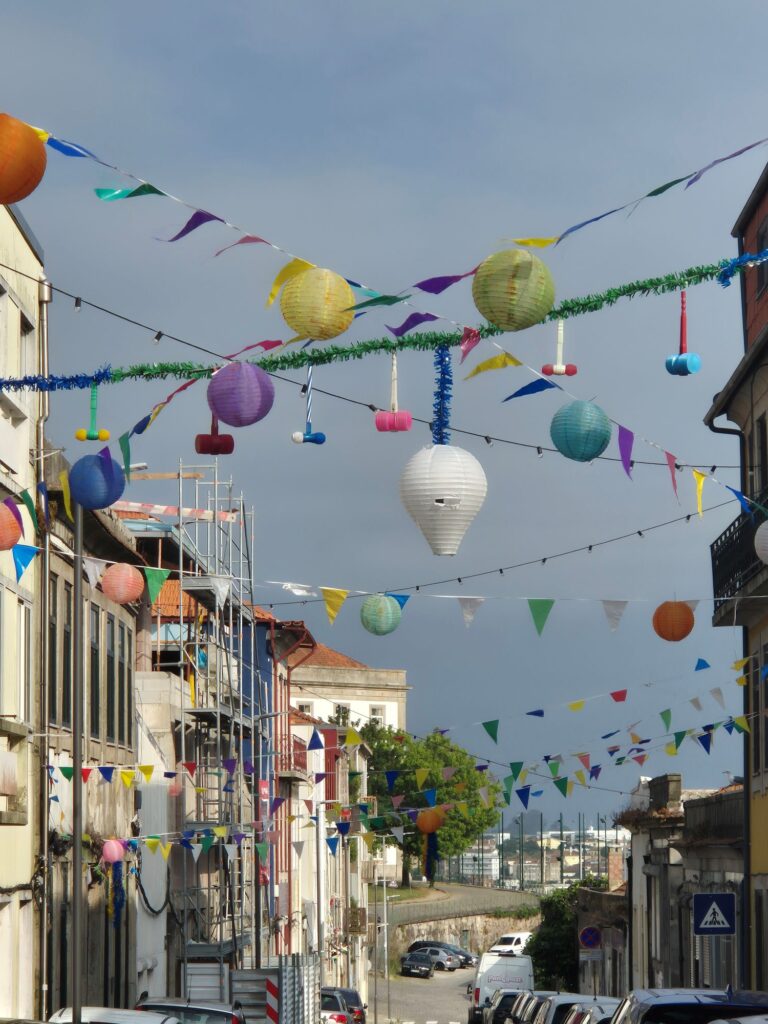
The city has been gearing up for the Festival of Sao Joao, which takes place on the night of 23 June and throughout the following day, since I arrived at the end of May. Everywhere there are brightly coloured lanterns, small plastic hammers (more on this later), bunting and sound stages, upon which young people in black Professor Yaffle suits are rehearsing their fado. Fado seems to have a cache with the youth over here in the way that Morris Men dancing does not and, whilst I want to appreciate it, it’s too mournful for my liking. Give me clicking castanets any day.
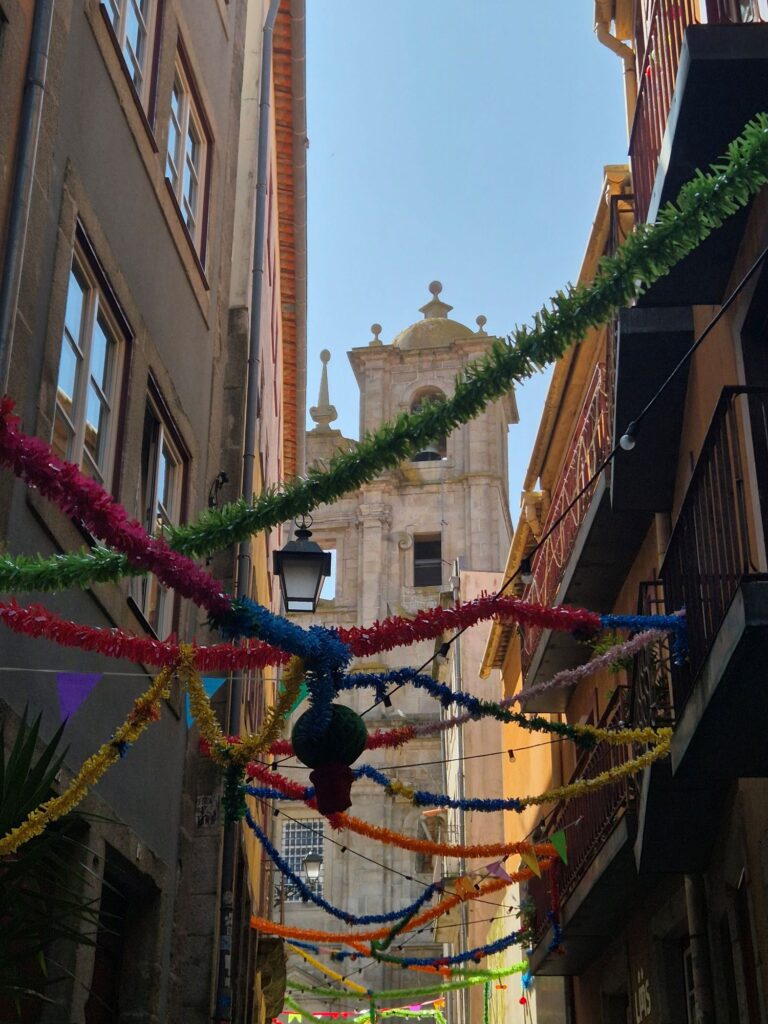
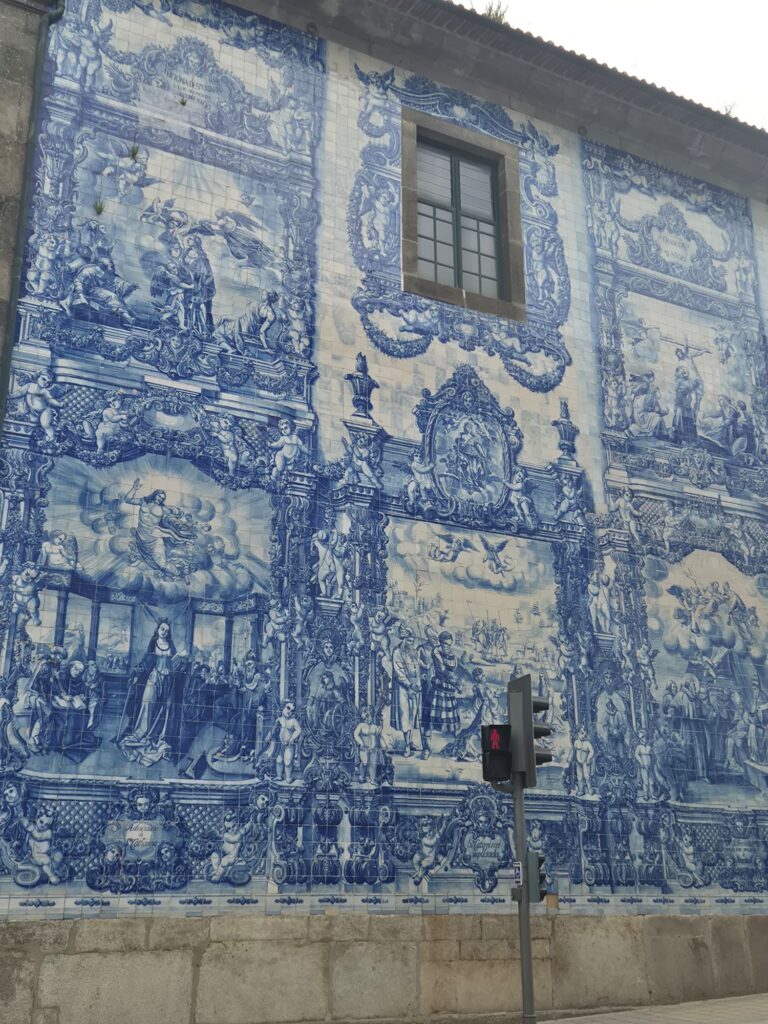
Instead, I tune into my audiobook of Anthony Bourdain’s Kitchen Confidential, which is apt because I’m in exactly the kind of no-nonsense place that Anthony would love. The kind of place where diminutive old ladies in black pop socks glare at you and where your meal has been plucked straight out of the sea. Afurada is a fishing village in Gaia, across the river from Porto. It’s catering to the tourists now, but traditional Portuguese life has been going on here for centuries and it’s a riot of colourful tiles and religious icons, with nautical themed illuminations waiting to be switched on for the festival.
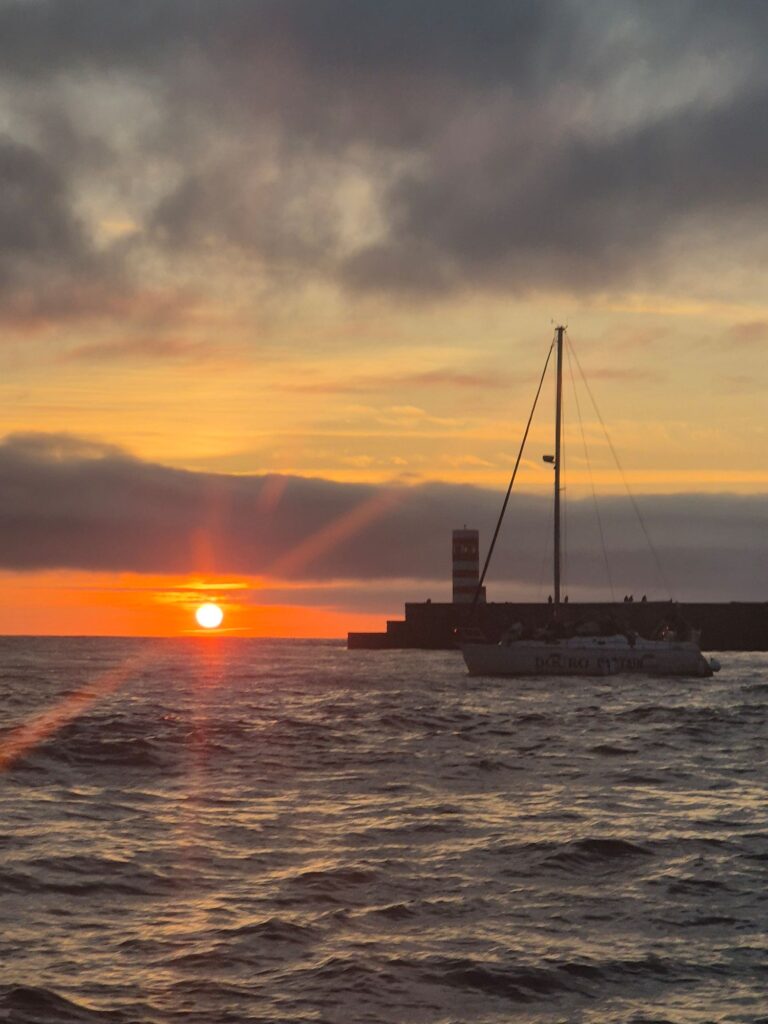
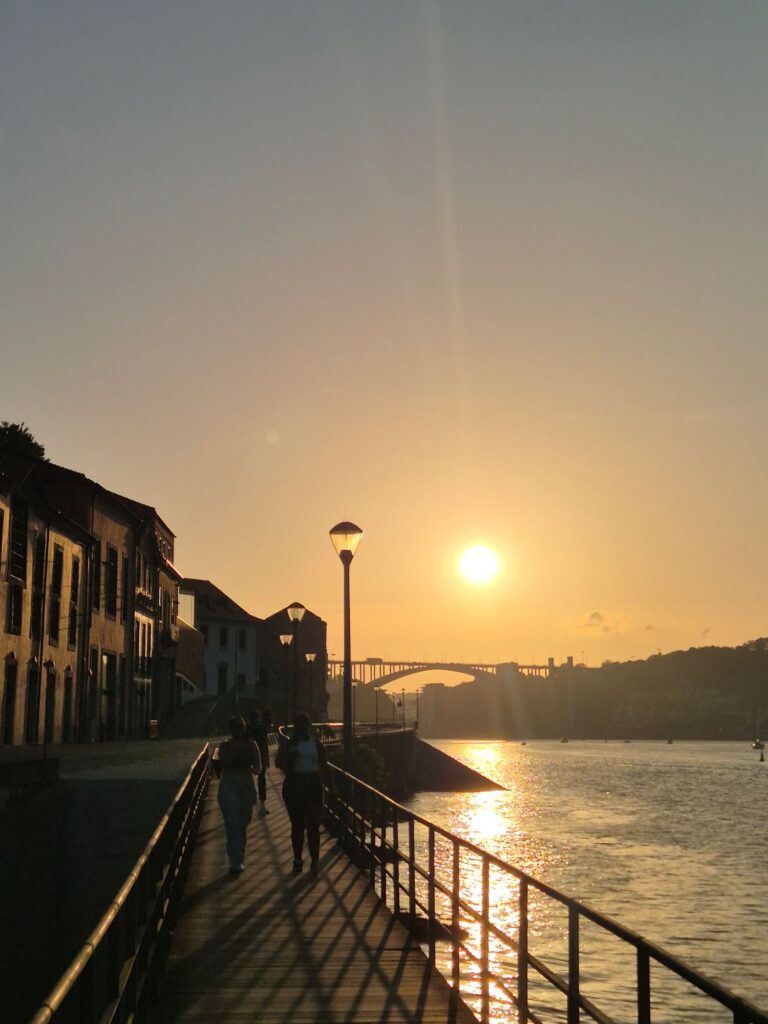
In the early evening, the smell of woodsmoke is already in the air as proprietors fire up their outdoor barbecues for the evening’s trade. I find one by the harbour side, with chequered paper cloths and a smorgasbord of seafood arranged in ice. Portions are enormous – four fresh, salt encrusted sardines, chips, salad and a carafe of questionable wine that could be Lambrusco from the 80s, (I won’t complain – they’ve got to make a profit somewhere), all for less than 15 euros. I walk back along the boardwalk that lines both sides of the river and watch the light changing as the day tips towards sunset. This is living.
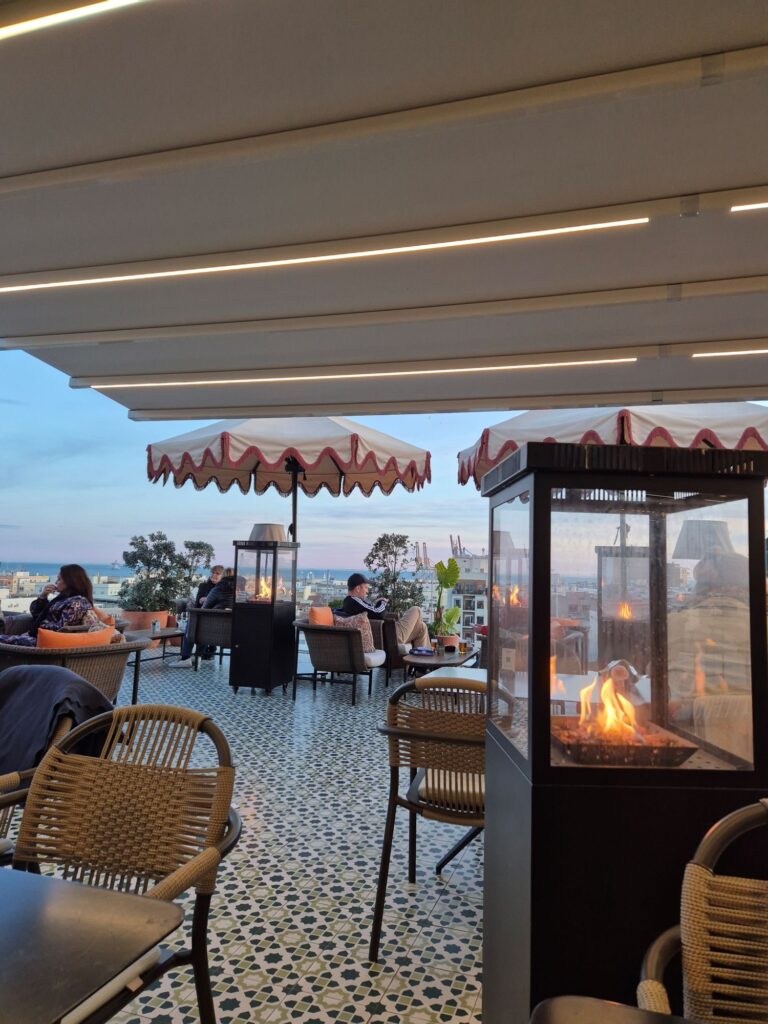
I have made a plan for the festival and will be returning to the terrace at Casa Camelia with a couple of people who are also new to Porto. The party is made up largely of hotel residents and we arrive clutching our plastic hammers which squeak when you hit someone on the head with them, the tradition on this night. It springs from the original version of using a long purple allium and I can see how it might get old by 11pm. I meet more Americans, although I suspect one couple might not be dashing from Donald when the man asks me, ‘Isn’t London really dangerous now? I hear it’s been overrun with…..’ He stops speaking and looks at me expectantly. It’s not the first time I’ve heard this out here and I attempt to disabuse him, but he doesn’t seem convinced.
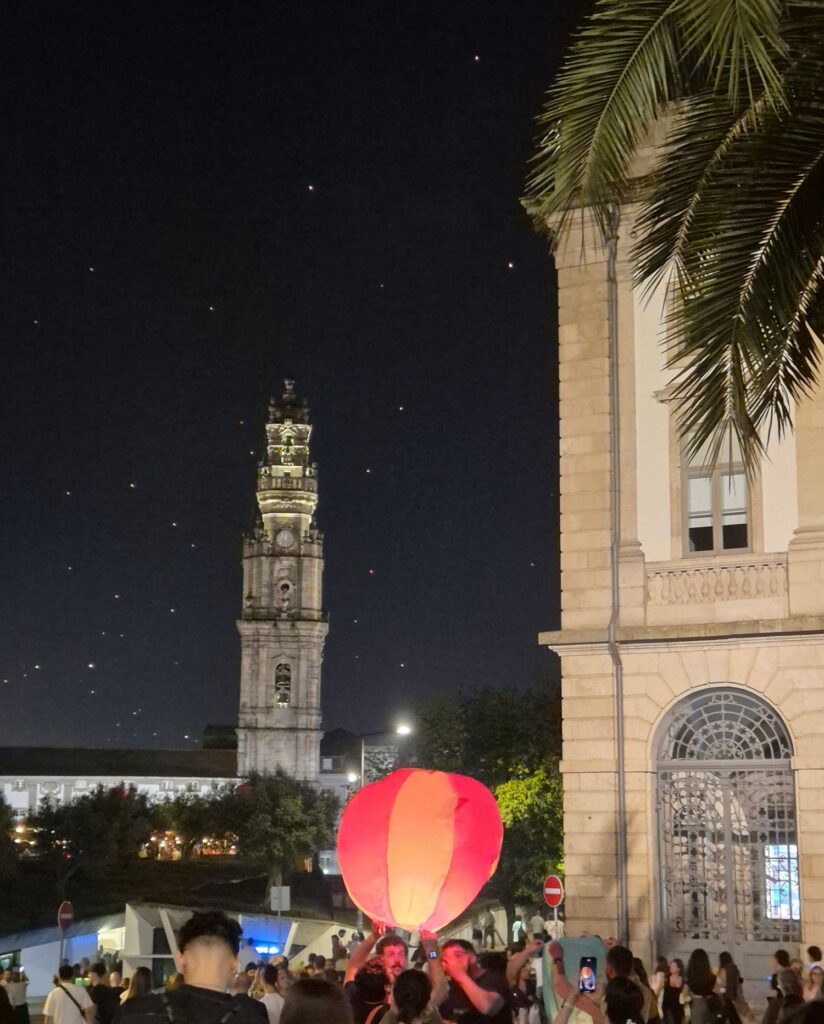
Alongside the fireworks, the other tradition is lighting a sky lantern and releasing it with a wish. Unlike the Portuguese, we are unschooled in this and grapple valiantly with our fragile vessels, until they fill with hot air and sail majestically up into the atmosphere. I know my new friends – self declared refugees – are wishing for real estate, and for different reasons, so am I. By ten thirty, the night sky is full of pin pricks of light.
Like so much in life, joy and tragedy live along side each other. As we watch the festivities unfold, a thick dark cloud is beginning to billow from one of the houses below the terrace. It has caught alight from one of the lanterns – not ours thank god – and there is a panic sweeping through the guests. By the time I leave the party, the fire engines are wailing and I’m walking back through streets that are erupting with an oblivious, bacchanalian energy. It’s the weirdest ending ever to a night out.
My first trip outside of the city is to Pinhao, a tiny village on a sweeping bend of the Douro about two and a half hours inland. I’m visiting a vineyard called Quinta de la Rosa and have booked a wine tasting. I’ve been warned not to sail there because it is mind numbingly boring to look at banks of grapes for six hours, so I choose the train from the azulejos covered Sao Bento station, clambering onto something that looks like it hails from the 1950s when Portugal was still in the thick of a dictatorship. Devoid of comfort or air conditioning, it’s a rackety ride, punctuated by loud blasts of the horn, but within an hour we are out of the urban sprawl and hugging the banks of the river. We try with limited success to film glimpses of it as we whizz past and the heat begins to climb.
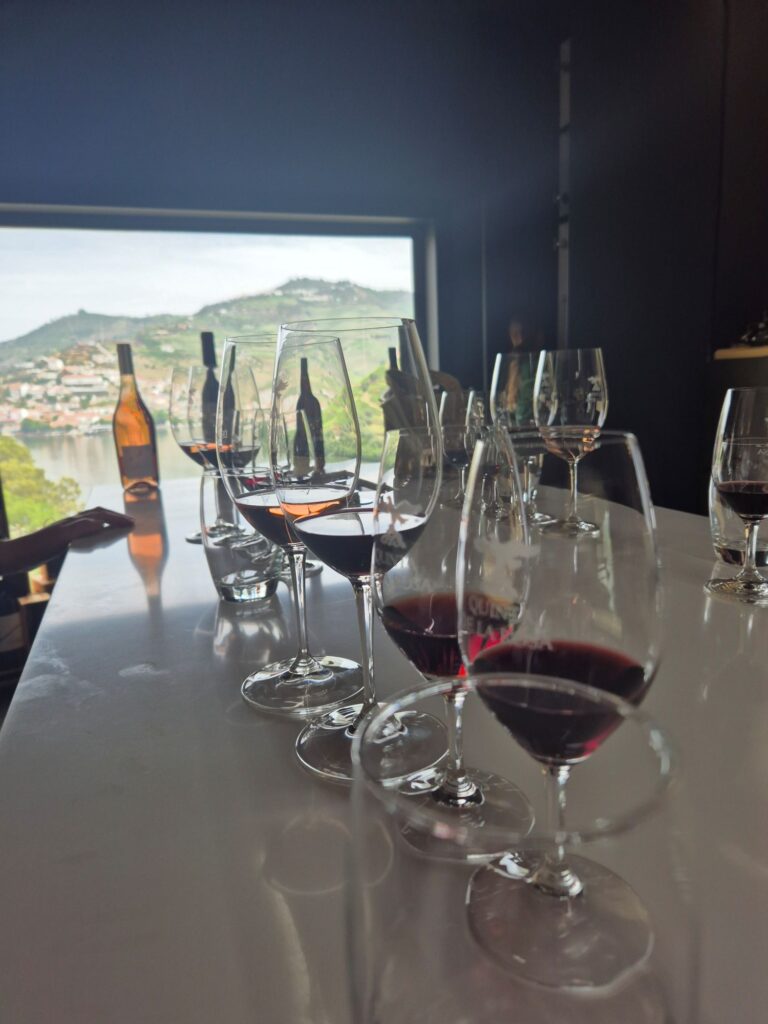
At Pinhao, I flag down a passing taxi driver who gleefully takes seven euros off me for a four minute ride. In Portugal this is extortion, but I allow her to rip me off because it’s now a balmy thirty eight degrees and I don’t know where I’m going. I make it just in time for the start of the tour, comprising of four Brits, who have made it out of the Algarve, and two Americans. ‘Oh, it’s just one is it?’ says the receptionist as I try not to sweat on the desk. Ah. The unmistakable soundtrack for the solo female traveller. That look of pity and disappointment that you allow to either make you contract or expand. Throughout the tasting I dominate the conversation, feeling as ever compelled to crack jokes about my shortcomings. I narrowly avoid referring to my tawny port as ‘Christmas in a glass’, an embarrassingly parvenu observation when you are seated next to someone who is doing a masters in wine management. To be fair, you could argue that in life I have already achieved this qualification. I really need to find some food to mop all this up.
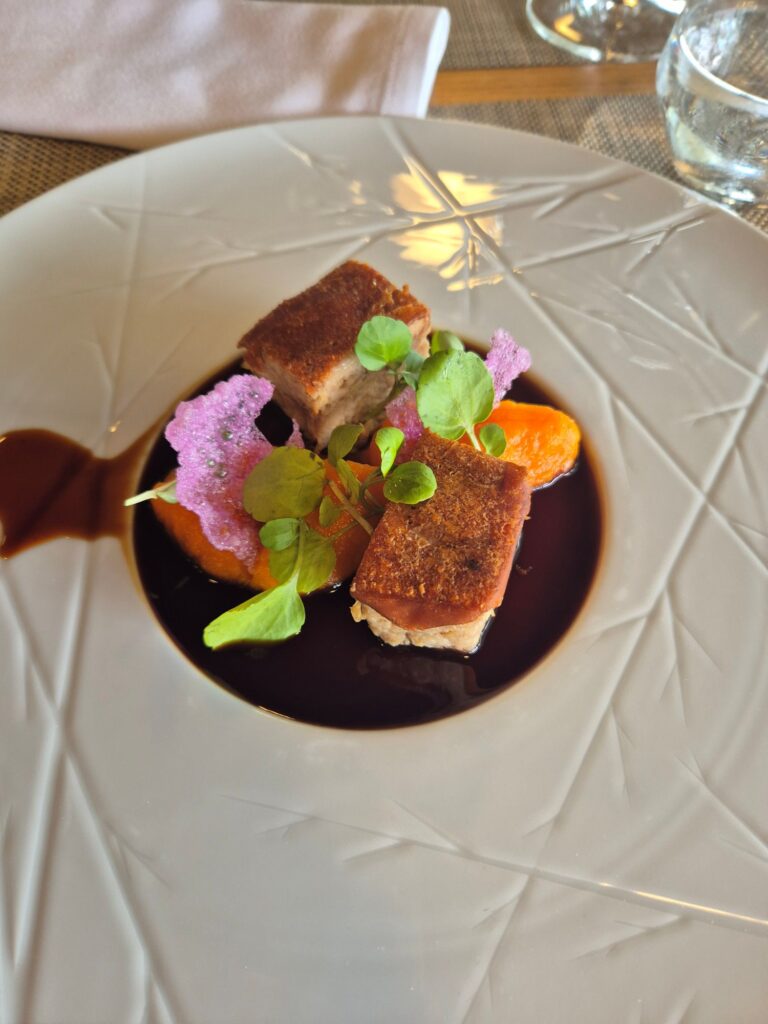
Nobody puts SJ in a corner, so I chose a table in the middle of the restaurant upstairs and watch as people on the terrace are elegantly spritzed with mist. In the far outside corner, a patrician looking man in fine linen, also dines alone, but I reckon from his aristocratic bearing that maybe he owns the joint. From his position outside, he is unable to hear the cacophony in the kitchen, as angry Portuguese comes out of the chef’s mouth like bullets. The staff sail like swans through the swinging doors, and plates appear as canvases for finely curated works of art. Everything Anthony Bourdain says about restaurants is truth.